



Contents
-
- Preface
- Introduction
- Stories
- We need to Understand the Past to Escape it.
- Dialing Up
- A Powerful Idea
- Internetworking! AKA, The Internet
- Home Networking
- Broadband!
- VoIP – the Last Frontier
- Networks vs Networking
- Paying the Broadband Piper
- Wireless
- The Public Packet Infrastructure
- Getting to the PPI
- The Back Story
- Further Reading and FAQs
Preface
Perhaps my biggest challenge is getting people to understand why the shift from connectivity as a service (AKA broadband) to what I’m calling Ambient Connectivity™ matters so much. Part of it is that confining use to “pipes” creates scarcity. The bigger problem is that limits innovation to what is permitted by a rent-seeker in the path.
By shifting from today’s model of telecommunications services to a public packet infrastructure we can take a rivalrous market and convert it to a non-rivalrous core infrastructure. This creates enormous opportunity and economic value simply by redefining the market structure and finding abundance in what we already have.
If facilities are rivalrous (especially in wireless) then it makes sense to do licensing despite the US First Amendment and speech becomes a privilege rather than right. If it is not rivalrous , the rationale for licensing goes away and we honor the US First Amendment by treating speech (and inclusion in society) a right.
The reason for this fundamental shift is that in the 19th-century intelligence was in the network because the end points (phones) were dumb – nothing more than a microphone and a speaker. They depended on the smarts in the network to preserve the waveform. Now that we have smart endpoints, as VoIP (Voice over IP) demonstrates, we no longer need to rely on a network provider to assure a reserved path. A reserved path is rivalrous. With VoIP we have (fungible) packets which allow us to share the common facilities in a non-rivalrous way, just as we share road lanes and sidewalks.
This isn’t a change in degree, it is a change in kind. Even if telecommunications services were free, that’s not the same thing as eliminating the third party in the middle of all relationships. The concept of telecommunications is rooted in the bygone error of “dumb” devices that depend on a provider. Now that the smarts are in our devices we need to rethink the very concept of telecommunications.
Our public policies have not made this transition, because of the regulatory infrastructure created to protect the business of telecommunications from market forces. A PPI eliminates the need for this heavy regulation and allows us to tap into the abundance we have by pooling all the facilities into an essentially limitless common.
The rivalrous nature of classic telecommunications not only creates scarcity, but it also requires licensing speech to dole out the (artificially) limited capacity. A packet-based approach not only eliminates the need to pick winners (licensees) it removes the ability to pick winners. It is inherently neutral.
We frame our public policies around the idea of “Internet Access” because that’s way the phone system worked. Today we need to fully participate in a connected society and not just access the internet as a place apart. It’s a metaphor that traps us in the past. It treats the ability to communicate and the ability of our devices to connect on our behalf as a service rather than as a fundamental right. It accepts the idea of a third party in the middle of every conversation and relationship.
It's not just a public policy issues, our systems engineering is also affected as I explain in the section on Ambient Connectivity.
We so implicitly accept the “givens” of telecommunications. In this essay I attempt to call out those givens so we can discover new possibilities. One example is the idea of “accessing” the internet. What becomes possible if we don’t have a third party, the telecommunications provider, in the middle of every connection and conversation?
In 1990 if I’d ask that, I’d have met with a blank stare because who could’ve imagined the Web? The key is to provide opportunity for such innovations without the limits implicit in the concept of a “provider”.
Telecommunications is a means and not an end in itself. It was designed for the 19th century when we had endpoints that were just microphones and speakers and relied on a third party to maintain the path that carried the voice waveform.
Today we live in a very different world - one with smart devices - and we no longer rely on a provider to preserve the soundwaves. The internet has given us a taste of a world of possibilities that were unimaginable just a few years ago when phone calls cost $1 a minute (adjusted for inflation) for long distances, and far more internationally.
Today we casually access websites with full video at no cost (beyond the commodity connection). We’ve come very far by repurposing the existing telecommunications infrastructure.
Imagine would be possible by having an internet-native infrastructure – a packet-based infrastructure or a PPI. We could then assume connectivity.
The early internet created opportunity for innovations such as the web. We couldn’t have imagined such a possibility when we first started internetworking, but we created opportunity for such innovation.
A telecommunications infrastructure was created for what we could imagine in the 19th century. A PPI enables beyond what we can imagine by not limiting ourselves to choosing among services (like phone calls or class television). We should not limit our imagination to what a service provider can offer. Instead, we need to empower local communities to act locally and drive the virtuous cycle of innovation enabling demand to create supply.
Mexico City – a case study?
I recently found out that Mexico City is now offering free public Wi-Fi. What makes this interesting is that, according to the website, there is no requirement for logging in. It is just there! The coverage is limited but there are a million users. This means that one can implement medical monitors, for example, which can take advantage of intermittent but open connectivity. Such innovations can drive a virtuous cycle of innovation and thus drive additional capacity and availability. For now, it is “under the radar” in the sense that it does not directly challenge traditional telecommunications.
But it would take only a few innovative applications to drive the process just as email and the Web drove the adoption of internet connectivity. My assumption is that the initial driver is “digital divide” access. But it is not limited to that purpose.
I intended to learn more about the effort. As with any project, there needs to be a champion and, in this case, it is Clauda Sheinbaum, the President of Mexico!
Apparently, Mexico City's initiative aims to provide internet access as a right, particularly benefiting those without home internet connections.
Introduction
By conflating “Broadband” with the internet we find ourselves stuck in the past unable to realize the full benefits of connectivity.
I grew up as the age of software unfolded. The concept of telecommunications was well matched to the limitations of the 19th century technology. We had “dumb” endpoints (microphones, speakers and telegraph keys) and we relied on a smart network to make sure the messages and calls arrived intact at the right destination.
Today, with software, we have intelligence in our endpoints and those smarts built into the network are standing in the way of exploring new possibilities. See The Rise of the Stupid Network from 1997. The business model of telecom is premised on the idea of a path provider adding value when, today, not only do I not need those favors, but they are also working at cross purposes without the ability to innovate. What were once service providers are now merely rent seekers, as smarts have moved out of the network and into our devices. Phone calls are no longer a service. They are an app.
On the surface we’ve done a very good job of emulating the past as if nothing fundamental has changed. This is why I need to share my personal journey. I’ve been fortunate to be “in the room” at the major inflection points. This has given me insights not available to most. These aren’t simply academic musings. I learn by doing and building. And I take it personally when there is a telecommunication industry that says I can’t for no reason other than–we couldn’t figure out how to do it 100 years ago. It’s a reminder that the FCC itself is nearly a century old and a half-century behind the times.
Perhaps most important, I’ve never stopped asking why. It is not enough to know the technical details of the internet, I need to know why it’s been so transformative, and I look at the economics and social aspects as well as the technical.
The concept of a digital divide due to the inability to afford an internet connection is a prime example of a problem that simply ceases to exist once we move from connectivity as a service to connectivity as core infrastructure like roads and sidewalks. Imagine being unable to afford to take a stroll because you can’t pay the sidewalk provider.
Note that there is also the issue of underserved communities which I cover in the PPI section, and the need to educate people about how to take advantage of the new opportunities.
Addressing the digital divide is a good example of recognizing that a problem is a consequence of an underlying flawed approach rather than a problem that can be solved in isolation. It’s not about affordability but rather the offensive idea of a third party in the path demanding a payment merely because they can prevent someone from communicating – classic rent seeking.
One more key point is that I’m not talking about the internet being free but rather removing the concept of having a place to put a tollbooth. In the classic “access” framing you had to pay a provider for access. There is no place for a toll booth in an infrastructure model any more than there is in an open field.
Stories
Before I get into technical details, it’s useful to see stories to provide an understanding of the difference between infrastructure and the services that use that infrastructure.
The key point I’m trying to show with these stories is that we need to understand that relationships between endpoints are independent of the physical means we use to exchange packets.
The only reason we conflate the two is that the concept of telecommunications made sense 200 years ago when we had dumb endpoints and relied on the network to keep the string taut between them.
The key point of the stories is that a broadband connection is just copper or glass. It is not inherently a networking medium or a service. It is more like a sidewalk that we use to do strolling or a “road” for packets.
Today’s internet style packets enabled us to solve this using the smarts in our endpoints.
A Story of Farmer and Fence
This isn’t necessarily that realistic, but it makes a point. Or at least I thought it wasn’t realistic till I found this story about a barbed wire telephone network.
A farmer and I share a fence with a wire running the length of the fence. The wire we use turns out to be a great radio medium, so I can use it like an Ethernet as a shred medium to connect to the larger world. It wouldn’t make a sense for him to charge me extra for the value of the services I use such as video calls. That value isn’t in the wire itself any more than the value of a chef’s creation is in the plumbing.
Yet we pay for just such a wire (AKA, cable) when it is called broadband because years ago the wire was a cost of doing the business of providing services such as phone calls. The world has changed. Phone calls are now apps.
Yet our public policies have not caught up with the new value. It’s as if I couldn’t chip in to pay my portion of the cost but rather had to pay the farmer a monthly fee based on the value of the services I use rather than the one-time cost of the wire.

We can take this story further and recognize that wire is now a common resource. We can just add inexpensive Wi-Fi access points along the path and use it to monitor crops and even track livestock at no additional cost. It is also a means of emergency communications. A physician can provide a medical monitor and just assume infrastructure without the need to make special arrangements or explain to how get internet “access”, let alone deal with multiple “providers”.
You still need to pay someone who provides a service such as crop monitoring. You pay the provider of that service completely apart from any contribution you make towards paying for the fence wire itself.
The community is enriched by the new opportunities created by this shared resource just as it is by RFD (Rural Free Delivery) and roads, but the cost is essentially zero – far less than the postal and road services.
The cost of an infrastructure approach is very low, and the value is very high. Do we still limit ourselves by policies from days when we depended on the services from phone companies now that we can do it all ourselves and realize value far beyond what a phone company could possibly provide?
The Real Story … and Future
Today’s internet has abundant capacity far beyond what we could have imagined only a short time ago. It’s not only that we have seemingly unlimited capacity; what we have is the opportunity to innovate. I use Voice over IP as a key example since it was done entirely outside of the telecommunications industry with a radically different business model.
There is one internet, yet we maintain the illusion of multiple providers simply to keep a dead business model alive past its due date.
Yet we cling to the past because we accept the givens implicitly. To escape the past, we need to bring our implicit understanding into sharp relief.
Today’s telecommunications infrastructure is the product of the 19th century. It was initially used for postal-like messages as telegraphy but by the 1870s it was able to carry voice (though the calls were still billed as message unit, AKA telegrams).
At the time a telephone was just a microphone and a speaker and connected by a wire very much like two tin cans and a string. The value was in the service – phone calls. The infrastructure was a cost of doing business and owned by the phone company. Even when the technology was digitized, it was still necessary to have a provider set up the path between two endpoints so you could speak into the microphone at one end and be heard at the other.
By the 1970s we had computers we could use at both ends of the connection and no longer relied on a provider to ensure that the messages would arrive intact. We could use the software in our computers to program around any lost packets. And just like early telecommunications was limited to messages, so we need a separate telecommunications infrastructure.
As with Moore’s law, the virtuous cycle of innovation was able to build on these early applications and track advances in computing. The first big consumer application was the Web, which was based on the messaging that could be done by repurposing phone lines.
By the end of the 1900s the situation had reversed. The capacity created for the Web enabled voice as an application rather than as a network service.
This changed the world because not only do we no longer need a special purpose trillion-dollar phone system; we need a new business model that allows us to tap into the abundance of the internet.
Instead of buying a movie from a cable company, we pay Netflix and others.
This is where the story of the farmer’s fence comes in. If we put in a new wire, it’s obvious that it is just a wire we pay for as a wire. In the same way, we pay for sidewalks as pavements and don’t charge for strolls by putting a turnstile in front of ever house. The sidewalk, and now the wire, are core infrastructure.
Shifting from a business model of making money by merely owning the wire, not that it’s just a wire, is called rent-seeking. It may be useful as a financing option but by pretending we are buying services, it is, in effect, a loan we can never pay off.
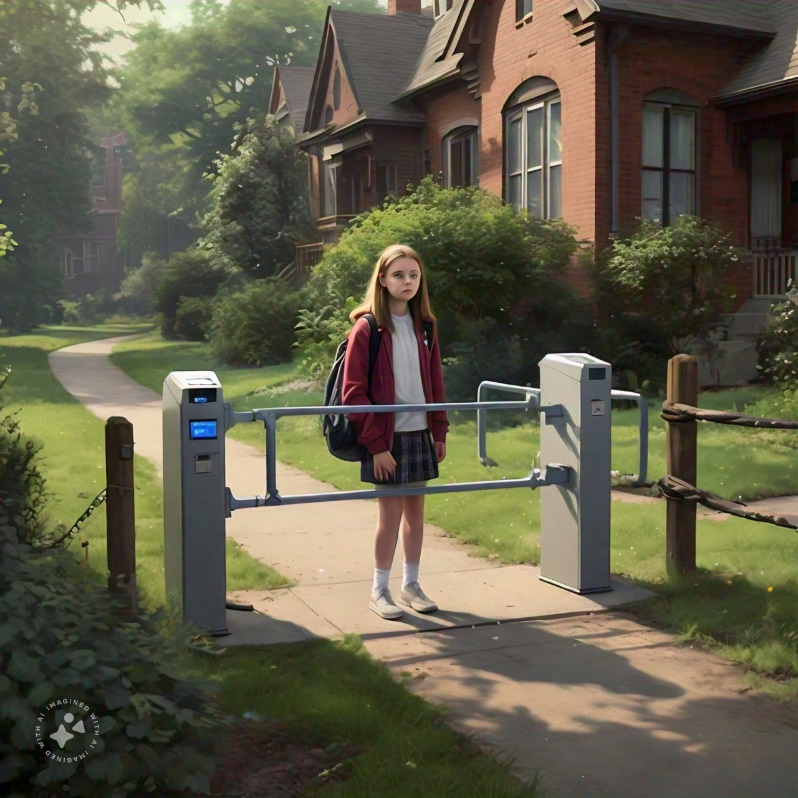 Just as the turnstile in front of the sidewalks creates the concept of an unaffordable stroll, a subscription model creates a digital divide by introducing the concept of unaffordable connectivity. One reason we tolerate this is that we just think of the internet as the web. We don’t know what is missing, such as ubiquitous connected health care. Devices can’t get past a paywall and the need for an account means you have to negotiate with every rent-seeker and, even then, may lose connections simply due to a billing error.
The reason for today’s abundant connectivity is that the internet converts everything to fungible1 packets, which means that no packet is special. This means that we can pool all our capacity into one internet and that capacity is useful for all applications. You no longer have a phone call taking capacity way. Rather, protocols like TCP allow fair sharing. I say fair sharing because since the packets are all the same you can’t sell preference. With an infrastructure approach network neutrality is built in without the need to regulate companies so that they don’t take advantage of their control of the facilities.
We’ve already converted the wired infrastructure to packets, and we use packets for cellular. It’s a short step to a Public Packet Infrastructure. Fortunately, we don’t need a PPI all at once – we can do it incrementally using the existing telecommunications facilities as a starting point, just as we created the internet using facilities leased from the legacy providers.
To oversimplify – imagine Wi-Fi everywhere without you (or your devices) needing to ask for permission. It just works for your computers and devices seamlessly.
But first we need to better understand how we get here .... and where we can go.
We need to Understand the Past to Escape it.
Today’s internet is falling way short of its potential because we are still treating it through the lens of 1970s computing. By the 1990s we had AOL and other online services we “dialed into”.
But the internet is something different and far more. The abundance that allows us to stream and work from home hints at the larger possibilities.
The idea of accessing online services harks back to the days when we pretended to be making phone calls to reach AOL and other sites. Those phone lines were a service that we had to subscribe to. Today phone calls are apps – we can use WhatsApp to make not only phone calls, but video calls, at no cost!
Then what are we subscribing to? And why do we still see broadband as “access” the internet. That is very different from my vision for home networks in which we participated but didn’t “access” the internet.
It makes no more sense to put a turnstile in front of every house than it does require a subscription merely to participate in society.
Of course, just as with the phone system in the 1970s when people were afraid of change because they couldn’t imagine today’s internet, today people are also afraid of change.
But, first, let’s look back at the days when we’d access online services by dialing up.
Dialing Up
In August 1966 I bought home a modem along with a teletype. A teletype is basically an electronic typewriter. When you pressed a key, it would send a character over a wire. When a character was received it printed on a roll of paper. The wire would normally run directly to a computer, allowing you to interact with the computer.


You may remember or, at least, have seen old videos of people dialing into AOL with a screeching sound at the beginning. That’s the mating call of the modem. The problem with the dialup model is that each call occupied a phone line as if we were making calls lasting hours with a phone network designed for short conversations. We were running out of capacity!
Fortunately, the solution was found in the 1970s and by the end of the 1990s the supposed scarcity of capacity had vanished as if by magic.
A Powerful Idea
I’ve had a very fortunate journey. I was exposed to online computing and working from home in the 1960s. In the Spring of 1973, I was fortunate enough to be exposed to the powerful idea that gave us today’s internet.
In the 1970s researchers in Hawaii created ALOHAnet using radios rather than leasing lines from a telecom company or using a network such as the Arpanet. What was new in the 1970s was the increasing affordability of computers so that a research group could use their own computer to program around the unreliability of the radios. My classmate Bob Metcalfe used this idea, but instead of using over-the-air radios he used a coaxial cable as an Ether – hence the name Ethernet. This was baseband. I wanted to do a broadband version of the MIT cable TV network at the time but, while I worked out the design, I never implemented it. This is not to brag as much as a reminder that ideas need contexts in which to bloom.
At the time it wasn’t obvious, at least to me, how different this was from a traditional network. After all, both were able to reliably transfer a file by calling a “transfer file” routing. But behind the curtain there is a world of difference. Because the implementation was on the user’s machine we could rethink the need for reliable delivery, even if it meant a delay. Streaming, for example, has a better-late-than-never design point – an idea that is not typically part of the offering from an old-line network company.
This is part of the larger challenge in understanding that shifting the smarts from inside the network to outside gives us the ability to find solutions appropriate to our needs, and to use our cleverness. It’s like having a conversation to clarify misunderstandings rather than just a lecture.
Internetworking! AKA, The Internet
It seemed like a clever hack, but it would turn out to be so much more. Researchers tasked with interconnecting the networks of the day recognized that they could greatly simplify their task by offloading the traditional tasks of a network to users rather than doing it in the network.
What seemed like a major limitation was liberating. A traditional network took responsibility for assuring that if you made a phone call from one network to another, it would translate the formats to assure you could speak to each other.
Since the software ran on your own machines, you could invent a new kind of email and didn’t rely upon the network to assure that the two ends of the connection agreed. Instead, just the two of you had to agree. This seems like a major problem, but The Internet Engineering Task Force provided a meeting ground where people could pitch their approaches, thus providing a mechanism for the rapid adoption of the email we know today.
People would have working prototypes of the ideas. This typically didn’t involve large investments. A single researcher in a basement office would try out an idea for sharing physics papers. By the late 1980s researchers would assume that they were connected and build on the protocols already used for email, file formatting and simple document publishing. The result was the World Wide Web. By being open standard, others were able to contribute to creating the modern browser and today’s web.
This is possible because we removed the smarts from the network and handed them off to the endpoints. The phone companies which controlled the “pipes” recognized that this was an existential threat because they were no longer adding value! I’ll credit them with that insight.
But I’m getting ahead of myself. To most people, including myself, this wasn’t obvious because an operation like transferring a file worked the same, and demanding applications such as phone calls weren’t feasible in the 1970s.
Home Networking
In 1979 my friend, Dan Bricklin, asked me to implement the first electronic spreadsheet, VisiCalc. (Excel is based on the same design). Thanks to that experience, when I worked at Microsoft, I had the freedom to experiment. I worked from home because my wife didn’t want to move.
 Of course, I interconnected (AKA networked) my home computers, but how do interconnect them with the larger world of the internet? Thanks to being friends with a number of original internet designers I was able to learn rapidly and build on what I had learned in 1973. The key was using an early version of the home router you know today so that when I connected to the internet over a phone line it would think that I had one computer rather than a network. It’s a neat hack that made it possible for me to program around the limitations rather than needing favors from a provider.
I also had another device at home – a Radio Shack System 209 Intercom phone which used a radio frequency channel for the internet. Innovation is not coming up with ideas out of nowhere as much as recognizing what’s in front of you. In this case, it is the idea of using existing phone wires as a networking medium.
While I was working on these ideas, broadband came to the fore. The cable companies had already used their cables to provide additional channels and now saw the opportunity to provide new services such as interactive TV, home shopping, and internet access modeled on dialup.
These ideas came together at a time when home networking was used to refer to home control or, a word I hate, automation. From my experience I knew that we needed to have a common packet medium independent of any particular applications.
Home control could then be implemented as one application and, in fact, I became the point person for home control - but that’s another topic.
The idea of multiple machines was a tough sell at Microsoft because the assumption was that there would only be one computer in a house. even though from my own market research. I simply looked around and saw what the others didn’t. People handed down their computers instead of throwing them away.
The key design point was the requirement that users had to install their own networking. Hence the idea of sharing their existing phone wires in the days before Wi-Fi, which is now the preferred approach.
This meant it had to be starkly simple – just plug in your computers and it works.
This is why I took the approach of “no new wires” rather than requiring people run an Ethernet in their homes, I wanted to use existing phone wires (HomePNA). Fortunately, Wi-Fi became available about the time the first version of Windows (98se) with support for home networking became available.
Another key point was sharing a single IP address among all machines in the house. At the time there was a fee for each IP address because that was the business model of charging per set top box and per phone line. By using a technology called network-address-translate to share a single connection.
Broadband!
My approach was initially aimed at sharing a dialup line but the providers’ foray into using broadband to offer additional services meant that that broadband gave us what was, in effect, high speed access using modems just like dialup!
The good news is that even though sharing violated the terms of service, the providers cooperated. You were supposed to pay a monthly fee for each device connected just like with phone lines and set top boxes. Imagine IP printers and light bulbs if each one had to have a monthly fee. Yet we still pay a fee for each device once we leave our homes – I’ll get into that in more detail below.
The results speak for themselves. The approach of sharing the connection using the router has seen universal adoption.
The problem for the providers is that they initially saw broadband as a golden opportunity to reap profits without new costs. If someone wanted an additional landline, the carriers could provide it by simply updating a database with no cost at all. The profit margin was so great that at some point the jig had to be up.
In fact, 100% of the services that were sold via the broadband pipe are now applications in our devices. This includes phone calls thanks to VoIP.
VoIP – the Last Frontier
One of the themes here is that innovation is driven by a combination of constraints and opportunity. Until the discovery of VoIP, we had an internet which was too unreliable for voice and a dedicated voice network that allocated resources for the duration of a call. This approach of a dedicated connection created a crisis with AOL users using up the phone network. And indeed, one would lose use of the limited capacity because resources had to be dedicated for the duration of a call and AOL calls were very long.
This crisis vanished once all online connections used internet-like packets.
And that changes everything.
It’s a powerful example of the virtuous cycle in which innovation creates opportunities for further innovation because demands for resources creates a larger supply. Yes, demand creates supply when there isn’t a constrained supply.
We’re taught just the opposite with just-so-stories like the Tragedy of the Commons and other tales. The reality is that cooperating is the way to create abundance – other people are your friends not your enemies. (OK, not always).
In this particular case VoIP flips our traditional narrative of cause and effect. VoIP only exists because of the inability to pay for better services on the internet! There is a 100% disconnect between what we are trying to do and the packets we use.
Those packets are fungible in the sense that no one packet can get special treatment, and any packet can get lost. What is counter-intuitive is that this is the constraint that is liberating and made the internet possible. And one that is hard for people to grasp, which is why I’m fortunate to have learned about it in class long ago.
VoIP exists because it could use the capacity created for the web. That capacity created an opportunity rather than being built for a particular purpose. The capacity created by a phone company is limited to its purpose and is all or nothing. If the capacity was not available, then you were stuck and had a 100% failure until someone hung up and freed up a path.
Because we had fungible packet it was up to the innovators to figure out how to take advantage of the opportunity. A traditional phone call requires 56Kbps (or 64Kbps). If that capacity is not available there is hard fail. VoIP is opportunistic. If there is less capacity it adapts. If we step back and see the goal is to communicate, then one can step back to text messaging. Conversely if extra capacity is available then VoIP can include video. It is up to the user, not the provider! Ironically this ability to be opportunistic creates abundance by not having to reserve capacity thus making it unavailable to others.
It is important to understand that fungible packets provide for fair sharing in the sense they are all treated the same. You can think of it in the same way as cars and people sharing roads and sidewalks use social protocols. But packets allow for far better sharing without the constraints of physical systems. In physical systems you can’t throw away extra cars to solve a traffic jam but with packets you can.
This is why the original protocol for establishing a reliable connection even in the face of congestion is called Transmission Control Protocol (TCP). All the cooperation is done by users sharing the facilities. If the network provider tries to help by being smart, then it breaks because it has to lie to the endpoints. In particular, if the provider buffers to create perceived capacity, it is lying to TCP and when those buffers fill, it’s like hitting a wall rather than gracefully adapting to the actual conditions.
The final twist in is the story Alain Cohen tells of being at VocalTec, which did an early VoIP implementation that worked only on their LAN only to discover his users were using it on the wider internet because capacity had grown (thanks to the web) so that it worked well enough.
Because there is no relationship between the application and the facilities being used there is no way to charge for voice calls.
Because there is no reserved capacity, not only is there no lower bound on capacity, but there is also no upper bound. This means that the applications can take advantage of the available capacity for video too. At no cost!
Networks vs Networking
When Skype first appeared, it was sold as cheaper phone calls. The reality is that it is far more than that. It is a challenge to the very concept of a phone company, and to the larger concept of telecommunications.
The traditional business model of a telecommunications provider is basically an electronic version of the Post Office carrying messages and assuring delivery. We can also compare it with the railroads which carried messages as freight just as the Post Office transports envelopes as freight
Railroads are a good example for another reason. A passenger railroad provides rides as a service. It uses the money from such services to pay for the infrastructure necessary for delivering those services. It must prevent free riders. (A literal use of the term). This means that the default is failure. The ride has an economic value so you can decide if it’s worth it or not and whether you can afford it.
At the very least VoIP brings into sharp question the very concept of telecommunications services. In the 1970s the FCC attempted to distinguish between fundamental services such as phone calls and information services such as AOL. This is why ATT wasn’t allowed to sell Unix. There is an inherent conflict of interest in one company owning the facilities and selling services, because they can take advantage of their control.
The implicit assumption was that some services were fundamental and needed to be built into the network. VoIP puts the lie to this idea. The internet has already shown that we don’t need a separate packet network for data. VoIP means we don’t need a voice network.
Those who want very special treatment, such as high-speed traders, will need to bear the full cost of their private network, and that cost can run into the billions of dollars.
To understand this better we need to step back and ask what we mean by the word “network”. The word is so vague it can mean anything from a social network to a road network to a mathematical graph.
The implicit definition of a telecommunications network is a facility that enables a provider to sell services by managing the entire path in order to assure a connection that can carry speech as a waveform. While Claude Shannon digitized the network, he didn’t change the business model.
VoIP does. It means we don’t need a provider as such and can instead composite the path out of any available facility just like we create road networks by interconnecting local roads. We have highways as spanning connections just as we can have fiber backbone, but they are not fundamental.
If we don’t need one company that is able to manage the complete path of a connection, then there is no need for the very concept of a telecommunications company.
To make this even more clear, the classic model of railroads and telecommunications is to have a smart network paid for by the value of the services. If services are created outside of the facilities, then the business model is not viable.
Paying the Broadband Piper
I started this essay by talking about the concept of access as it was back in the day. In the 1990s I saw an opportunity in the broadband internet offering and flipped the model.
As we’ve seen, we never paid for “Internet Access” as such. We paid for a faux-phone call as a service and, separately paid AOL or other ISPs to let us connect with the larger internet.
Typical telecommunications networks used a protocol called ATM, or Asynchronous Transfer Mode, which are basically very short packets. Yet you never paid for ATM as a service because it as an underlying protocol.
In the same way, it doesn’t make sense to talk about paying for the internet because it’s the underlying protocol.
Similarly in the heyday of “cable” TV you paid your cable provider for the service and broadband wire was just internal infrastructure. Today you pay Netflix and others and 100% of that money is paid to the real provider of the service (video content, AKA Movies) and not to the owner of the facilities in the path.
The key is to recognize the wires in your house are just that – wires (and radios for Wi-Fi). You pay once and you own them. The broadband wire from your house is essentially the same thing. A physical facility, just like your sidewalk is a physical facility.
Now that 100% of the services are the endpoints – apps or sites like Netflix – it makes no more sense to pay a monthly fee any more than it makes sense to put a turnstile between your house and the shared sidewalk. We pay for sidewalks in a way that makes them free to use. The same should be true for the broadband wire (or fiber). You should pay for it as a physical facility.
There can be no rational subscription fee. It’s like charging for a book (physical or virtual) by the number of pages and not by the value. A blank book and one containing valuable knowledge would have the same price.
The answer is a rational marketplace that pays for infrastructure as a community because the value is in the whole not the parts – just like roads and sidewalks. The idea of unaffordable connectivity should be considered just as offensive as the idea of making strolls unaffordable so going to school or the store is too expensive for people.
The real value is positive in creating a resource for innovation just like the early PCs (such as the Apple) gave Dan and myself the opportunity to innovate in a way that wasn’t viable on expensive shared computers with a meter running.
Problematic Metaphors
Viewing broadband through the lens of “access” is just part of the problem. Internet packets don’t need a smart infrastructure because each one is tagged with a destination address and can find its own way (please forgive my anthropomorphic metaphors but it’s the only language we have). This means that we don’t need to have the point-to-point connection by confining the connection to a pipe.
When we had dumb endpoints (old phones) we needed the wire to maintain that signal just like that string between two tin cans. The power of VoIP is in showing we don’t need a pipe or a reserve path. Just the opposite – those are very limiting and prevent us from taking advantage of available capacity or adapting to it.
If a broadband pipe fails, you are disconnected but if you aren’t confined to the pipe the packets can find another wired or wireless route, giving resilience. No matter how many broadband pipes you have you are disconnected if there is a single failed link. With a resilient approach you’d just roll over to another one. But that isn’t an option with a subscription model. It’s another reason we need a new business model – core infrastructure.
The broadband wires may look like the electric grid and use the same poles. But they are not. Electricity has a cost of generation so you can tax that intrinsic cost.
Wireless
Perhaps the strange part of this is how the absence of a wire has created scarcity! The current wireless regimen was created in the 1920s to match the technology of having a separate path for each wired connection, thus there was a separate path assigned to each frequency band, and it was created like a wire.
This turns out to be a very bad algorithm because it creates confusion if two radios use the same frequency and a receiver lacks the information to separate out the signals. By calling it “interference” it sounds like physics, but it is not – it’s just a bad algorithm. Like getting confused if two people wear blue shirts and you can no longer tell them apart. It sounds silly because not only is it the basis for wireless policy but the need to assure that no two people transmit on the same frequency (near each other) has led to the need to license radios, AKA, speech.
This is a clear violation of the US First Amendment but was deemed necessary. And it was used to justify the existence of the FCC. The FCC treats wired and wireless bits differently because that’s the way it was in the 1920s. The irony is that the approach the FCC took in assigning frequency bands creates scarcity out of abundance.
Compare that with Wi-Fi that has created huge value by sharing the airspace without the need to apply for a license for each user. That’s where huge value has been created.
Cellular is another example of how packetizing has created abundant capacity. In the 1980s the big advance was sharing frequencies but cellular was expensive and didn’t work that well. By going to a packet-based approach we got a huge increase in capacity at a far lower cost.
An interesting aspect of this is that when LT4 (AKA 4G) was introduced it was seen as a data-only network with 3G for voice, but VoIP showed that it could indeed be used for voice. So, the whole 3G network is being shut down.
This has allowed carriers to share towers and facilities and, in effect, take an infrastructure approach. But they are holding onto that infrastructure rather than making it available to the public even though it puts the lie to the original justification for ignoring the US First Amendment.
Imagine if we took all the capacity and turned it into a public packet infrastructure.
I do need mention 5G as the latest hack – it’s just private Wi-Fi owned by the carriers, AKA billable Wi-Fi. It’s also tied to front-running cloud services and a return to the good old days of dedicated facilities and manufactured scarcity. It’s understandable that carriers are desperate for escape from the inexorable encroachment of the internet on their business model. Fortunately, 5G is a failure in its primary purpose of charging a premium since it’s too easy to program around it. A recurring theme.
The Public Packet Infrastructure
One key to the success of the internet is that everything is converted to fungible packets, so any capacity becomes a resource for all purposes.
This is the key idea that turns all facilities into an opportunity to exchange packets.
We no longer need to create scarcity by reserving a path for each relationship, even going so far as to run a separate wire to each phone even if not in use. This is how we create an abundance of capacity akin to an open field rather than restricting people to a narrow path.
The economics are part of it because it is necessary to have a sustainable funding model that doesn’t require a rent-seeker pretending to offer services such as phone calls or “access”. That very term “access” is a synonym for a rent seeker who can extract a rent merely by the ability to deny access.
The simplest way to think about PPI is to make the underlying packet nature of today’s networking available for wired and wireless connections. We pay for it as core infrastructure. We also make it available by adding inexpensive Wi-Fi access points along the fiber and wired paths and using any technology, including the 5G radios, to extend the reach.
By normalizing to packets we get today’s internet with even more capacity – not that we’ve even used up much of today’s available capacity. As infrastructure, anyone can extend capacity because free riders become a feature, not a threat.
By sharing this as common infrastructure we coalesce the many expensive purpose-built networks into a single facility. Fungible connectivity is resilient so rather than limiting emergency services to a narrow, brittle, public safety band they too can tap into resilient abundance and add even more capacity if needed using off-the-shelf gear.
Getting to the PPI
We already have packet-based infrastructure in our homes, on our campuses and in our offices and it coexists with the existing telecommunications word by treating “pipes” like broadband as tunnels through legacy telecom.
The footprint of the PPI can grow by coalescing areas of owned connectivity (PPI) with the billable paths of legacy telecom. For example, if an apartment house shifts to the infrastructure model, then the entire build can share a single “pipe” greatly reducing costs. Better, it can afford a backup path (perhaps wireless) for resilience.
Even better if a city adopts this approach it can join with related communities. The economic benefits of the PPI will accelerate the process.
The only thing holding us back is a lack of awareness. Note that my approach to home networking has gotten 100% adoption! It’s hard to think of the economic justification for going back to a monthly fee for each light bulb.
- Greenfields. A city installing new fiber can go directly to a PPI. There is no reason to bring in a so-called ISP since the underlying protocol is already IP. Their only added value is to prevent people from communicating so that they would pay for access.
- Cities with broadband. They can shift to a single-payer model with the city negotiating for the community as a whole. We wouldn’t need redundant infrastructure, so that in a city with multiple broadband providers there would be an immediate saving by having one. This also means hard bargaining because the first to cooperate would make the other infrastructure worthless. Another indication that something is very wrong.
- Other communities. This could be an apartment house, local coops, or other entities. The key is to have a geographic footprint so that if you are there you are considered to have access. so, there is no need for bringing back pay-to-access. This can demonstrate its value to the larger community.
- The Underserved. This is a big opportunity for the PPI. Traditional broadband is heavily dependent upon government grants. A PPI is locally initiated and can be opportunistic and repurpose a mixture of existing facilities without being tied to a pipe model. This is especially attractive to areas used to having cooperatives. There is an existing model in governments providing support as in Rural Free Delivery and Rural Electrification in recognition of the fact that these are basic, being part of the larger society. Support for the PPI should not be tied to rigid requirements but instead support the virtuous cycle of innovation. For example, farmers can get major benefit for crop management even without the high speeds for HD streams. The key is to recognize that the actual costs of the facilities are very low compared with the value.
- Camel’s Nose. Providing open low-capacity connectivity, at first, doesn’t seem to threaten the high-performance pipes. But just as new value in telecom is created using Wi-Fi, innovation will reward those who take advantage of such opportunities and drive the virtuous cycle. The connected pill bottle is a good example.
This is not meant to be a full discussion – just the start of a conversation. I plan to write a whole separate essay on how we can benefit from the PPI. One simple example I use is the connected pill bottle which could have a one-time cost of under $20 yet save lives without any need for a special infrastructure.
Dan and I changed the world because we have personal computers as unfettered resources Tim Berners-Lee would leverage the early internet. Imagine what else is possible when we remove the barrier to “access”!
The Back Story
Living the Future
I didn’t start out with a connectivity agenda. It arose from my experience as I tried to implement applications such as home control. I want to share my experience so you can better understand why connectivity is so important.
There’s a story that happened in the early days of the telephone. Alexander Graham Bell had trouble explaining the value of speaking to people beyond walking distance. After all, who needs to talk to people that far away?
I ran into a similar problem in explaining how I think about my home control. In a typical home, the physical wires define the function. You run a wire from a switch to a bulb.
I think very differently. I don’t depend on the wires to define the relationship between the controller (which can be a switched or web app) and a light source (a bulb). This means I can just place a bulb or controller anywhere and define the relationships software. I don’t simply turn a light on or off, I can send it a message saying I want a bright light during the day and maybe a more muted light in the evening.
Having an open interface means I can write a program to script some of the behavior, but that’s just a use case. I still tend to turn on a light when I enter a room by tapping the control surface at the door. But I can also have a turn off via the third-floor button, so I don’t need to walk back to each room.
When I add a new light, I just connect to the nearest power source, and I’m done. I can then control it by adding its name to my web app and creating a software-defined switch.
Seeing these as minor improvements is like seeing a spreadsheet as just a nice calculator.
What is really happening is a fundamental shift from network services to the ability to create our own solutions using any available opportunity.
I can’t fully share the experience I live, but I can give a sense of the larger vision of the shift from an “access” framing which is dependent upon a third party, to a connectivity framing that creates opportunity to innovate.
This is the very simple refactoring that the internet gave us in shifting the services outside the network and, today, LLMs which build on the fundamental idea of meaning coming from context.
It’s useful to watch Rory Sutherland. One point he makes is that we focus on what we can measure rather than what is important.
Mismeasuring
The goal of connectivity should be to maximize the benefit to society and one way is to provide a resource for transformative innovations. But how do you measure the value of opportunity? That’s the fatal flaw of broadband. It’s why we focus on an inane measure speed [sic – really bits per second] even though it’s a nonsense measure because there is a disconnect between bits (as glyphs) and meaning and value.
This is a Heisenberg problem – the very need to measure is fatal to creating value. The dialup web established its value at time when one 0.001 Megabits per second was considered fast. The value of what are, by today’s standards, modest applications is what drove the virtuous cycle. It was not at all about the speed (bit rate) any more than solving rush hour congestion is about faster cars. Yet we fixate on speed even if it means limiting our ability to innovate by confining us to billable paths.
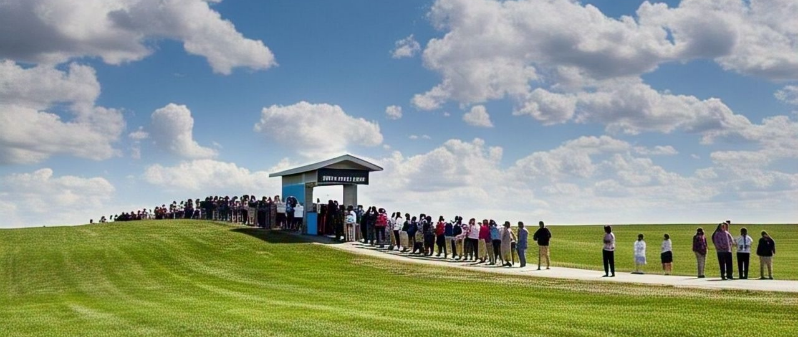 We force the packets past a tollbooth simply so we can measure “usage”. Imagine having a wide-open field but limiting the capacity to that of a single tollbooth? The problem with such measures goes deeper. It is based on a misunderstanding of Shannon’s measure of “information” which has essentially nothing to do with measuring knowledge or meaning. Shannon had a measure based on a control bit rate in a pipe. If you then encode Hello in UTF8 you will need 40 bits. But the word hello in normal conversation might not even exist – the meaning may be conveyed with a slight nod. That meaning of that nod can’t be measured out of context any more than you can cite the one reason a chicken crossed the road.
If anything, there is a negative correlation between the number of bits and value. But what is “value”. What is the value of the one bit that summons medical help compared with each bit in a terabit video?
I argue that fungible packets are a generative resource because they maximize opportunity rather than creating to a particular measure. I explained more about this in my essay on “Promises vs Discovery”.
In this chapter I try to give a sense of how I take advantage of opportunity.
VisiCalc, X-10 and more
When Dan and I created VisiCalc, the first electronic spreadsheet (think Excel), it was hard to explain to people what made it important. After all, people already had calculators and corporate users had MIS (Management Information Departments) to create solutions. The transformative power of rapid interaction wasn’t recognized. It seemed like a minor improvement in efficiency.
Ironically, a key to the power of the spreadsheet was the limited capability of the Apple ][ which kept the focus on the core functionality. Instead, we relied on the smarts in the users, not in the computer. This is a repeated story in which built-in smarts turn out to be a limitation. The internet is a dramatic example of a dumb network that allows smart users to innovate without being second-guessed.
There’s also the (Worldwide) Web which was initially created by Tim Berners-Lee to enable physicists to share their writings. The key is that users could just assume connectivity without having to negotiate with a “provider.
Most germane to this essay is my experience with home control – a term I much prefer to home automation. And that’s how I used to think about it – giving my computer the ability to control my house. I started using simple X10 devices using a simple ComputeróX-10 interface. In the 1990s home networking was synonymous with home control because people had only one computer in their home, but they could buy products to control their lights and other smart devices using disparate protocols.
It is telling that the very simplicity of X-10 limited it to just turning things on and off without knowing what they were controlling. (Yes, there is also dimming). In software we use the term factoring for breaking the problem down and limiting the interaction between elements. Smart protocols built in lots of assumptions that only limited them to prespecified use cases, they made it difficult to evolve. And often, as in recent Matter protocol, they require committees to agree before you can learn by doing and evolving the protocols.
This is what makes the internet protocols so generative in that they provide a common base of connectivity without building in assumptions that bias it to particular use cases. That constraint is what gave us Voice over IP. There was no ability to buy favors and thus it liberated us from the favors (AKA, second-guessing) of the traditional telecommunications model.
You didn’t need to rely on Zoom for video – you can run Jitsi on your own computer. For that matter this is a complete web server:

Admittedly it doesn’t do much, but the point is to show that a service like Facebook is built on very simple concepts.
Home Control è Connectivity
As I mentioned, when I first started using X-10 I thought of it in terms of sending commands to devices to control them. I soon discovered that trying to script behavior wasn’t that useful. It may be nice to have a light turn on automatically, but you soon find exceptions, and, at some point, it seems easier to implement a control service (AKA, a switch).
Today I think about the relationships between the controller (typically a web app running on a smartphone) that can send messages directly to a light bulb. There isn’t a single control point but relationships between endpoints using a generic infrastructure. Instead of the smarts being in the wire, the smarts are in the relationships designed by software.
The key point is that the focus is on managing the relationships (technically, bindings) rather than thinking about the accidental properties of network wiring plans. This past December (2023) I updated my system and realized that my networking gear (Ubiquiti) was not so much about network management as managing the set of devices such as access points and switches. There is another set of relationships among devices such as lights and groups, like the lights in my kitchen.
Rather thinking about control, we need to think about relationships. But we focus on the network because two hundred years ago, solving problems inside the wiring of networks was a major advance, just like canals and railroads were synonymous with transportation. And then we moved on.
The Virtuous Cycle
I’ve written about how the virtuous cycle works with demand for capacity generating supply which in turn opens up new opportunities for innovation. Fungible packets are especially generative because they aren’t limited to predetermined applications. It rewards innovators who can seize the opportunity rather than highest bidders who tend to be more of same-old because that’s where the money was.
The virtuous cycle doesn’t have a particular goal because you can’t predict the future. As the internet grew, we couldn’t anticipate the web and, even more to the point, that the capacity created for the web would beget VoIP because of the combination of the constraint of being unable to get special treatment and having the capacity to assume that a sufficient number of packets would get through in a timely fashion so we could program around the few lost packets.
Pulling the Cycle
The virtuous cycle is not magic. There was great innovation in the days of dialup with online services like AOL taking advantage of the new opportunity. The higher speeds and always-on nature of broadband created additional opportunities.
It’s like a railroad track that takes you to a given destination. You may not know that there are other possible destinations, and you have no reason to spend to lay new tracks. This is why it is important to have explorers that can create new paths.
When I was doing home networking at Microsoft, I was told by market research that people would have only one PC in their homes. At the time that seemed like an ambitious goal. But I already had multiple PCs and, more to the point, didn’t limit my thinking to PCs. I thought of devices such as the home control devices.
This is why it is fortunate that I looked for the minimal change needed to make home networking a consumer product. That meant no installers and other hurdles. Fortunately, that was feasible by focusing on bundling the internet protocol support and having it automatically configure. I also looked at “no new wires” solutions in the days before Wi-Fi. Fortunately, by the time home networking became common, Wi-Fi was a viable option even if it took years for it to work smoothly.
(Alas, Wi-Fi is still a work-in-progress because scenarios such as mine are still not the norm. Few people have hundreds of devices in their homes ... yet.)
The key lesson I learned from working with devices is that a paywall is fatal because the relationship between the intent and the pipes is severed. There is no way a device can pay a provider. The reason this isn’t obvious is we’re used to using a device within our home networks as a common area. You can just add a smart lightbulb without having a provider demanding payment. We get further passage because the facilities owner (you) pays for the broadband pipe.
But this fails if we try to use our devices outside the home. You have to make arrangements with each facility owner wherever you are. Again, this is masked because we have manually set up an account for each phone, so they seem to just work. In practice we tend to ignore the failures because we accept things don’t work and we can manually fix the problem.
A device can’t negotiate and dead spots (where your cell provider is not available) are a fatal problem. You can simply roll over to another provider or Wi-Fi.
To a normal user just looking at the screen these problems aren’t apparent. But for those of us who work with devices these are fatal barriers. We can’t be on call 24×7 to resolve these problems.
The Connected Pill Bottle
This is why the connected pill bottle is such a good example. If we had a $1000 device, we could put in the effort to negotiate with each provider at each location in order to assure things work.
This isn’t an option for a $20 pill bottle with a Wi-Fi connection. This is why the few connected pill bottles are expensive because they need to cover the support costs and, even then, they are not mobile. They only work where they are set up.
There is a mismatch because while the value of each such pill bottle is low, the few times you see a relative hasn’t opened the bottle, you may save a life. Not that that observer might be you. This is a mundane device that you can just buy retail.
The important point is that as with VisiCalc and the web, the transformational changes often come from the most mundane things because they enable rapid experimentation without having the hurdle and high cost of expensive efforts.
This is the magic of the virtual cycle with fungible connectivity. As with basic research, education, streets etc., that is the value of core infrastructure.
The pill bottle is the kind of low glitz example that doesn’t get much attention because it seems too mundane – just Tim Berners-Lee’s document-sharing effort (the web). One can deploy smart pill bottles that cost hundreds of dollars but that isn’t feasible for a family to casually provide one to a relative.
One can argue that for emergencies, as in signaling a heart attack, one can take the same approach as for 9-1-1 (the US emergency number) but you can’t know a priori that there is an emergency in the absence of messages. Even for a wrist device that monitors the heart, the fact that there is an emergency may only be discovered after the packet is received and trends analyzed. You can’t know which packets are more important out of context.
Ambient Connectivity
Broadband gives us a taste of the possibilities of fungible connectivity, but it is limited by being confined to a repurposed "pipe”. I use the term “Ambient Connectivity” for the architectural assumption that allows us to assume connectivity when writing an application. We don’t have to think about negotiating for passage.
Our thinking is implicitly network-centric and reductionistic as we build upon the networking pipes as a layer. A different approach is to focus on the application and problems we are trying to solve. I should be able to focus on two devices that form a system. Perhaps a control and a bulb to use a very simple example. The two endpoints are bound together independent of what is between them.
I explore this approach in Systems, not (just) networks. The current version is a first draft, and I plan to rewrite it as a companion piece to this essay.
The key point is the very concept of networks as a service is a distraction. Not only does it get in the way of thinking about systems as a whole, but telecommunications policy forces us to focus on what is in effect, an accidental property. What’s worse is that there is no direction relationship between our intent and the pipe. If I send a message I can’t know if it is being blocked by some intermediary demanding a payment or doing me a favor by second-guessing, AKA filter, my conversation.
It is hard to do good system design in such an environment.
Stepping Up
The focus so far has been on the “network”. I put that in quotes since connectivity is the new framing and is not limited by the physical topology of the facilities.
The relationship between devices at the endpoints of a network is only part of the larger picture. More important are APIs or Application Program Interfaces that allow computers and people to create their own solutions rather than relying on convincing a provider who has nothing to gain.
The world has converged on common practices such as using the same HTTP protocol we use for the web to enable us to smoothly mesh the physical world and device world.
Today devices in my home have such interfaces which can provide information using web protocols or provide an interface for tools that work on my behalf. It is a sharp control from today’s world in which we need a separate application for each set of devices.
More problematic is the tendency to turn simple products into services. This is fine for creating recurring revenue for the seller but, just as with smart networks, it creates a fatal dependency on a third party. Imagine if you can’t turn on the lights in your house because a distant cloud service failed.
Imagine if there was a UL (Underwriters’ Laboratory in the US) standard for a port on each device that provided information such as model number and a URL to the user manual.
Imagine.
Further Reading and FAQs
Feasibility vs Dystopias
To many readers what I’m saying seems utopian and very expensive. The reality is the opposite. There is one essential point, which is that the technology has already the reshape the market. Whereas once we had to pay providers for phone calls, those are now applications. This means that the telecommunications business model of paying for the infrastructure by the revenue of services can’t work. And since we don’t need a provider offering reserved facilities, we have a business model problem.
This means that we just have to change the way we pay for existing facilities. We do not need to build new facilities except to increase capacity. But we already have a superabundance as shown by Netflix, Zoom and others. We can also use the existing telecommunications anywhere there is phone service, albeit with limited capacity. If subsidy is needed as with today’s broadband that money and the benefit go to the community rather than the shareholders of a provider.
This is pragmatic not utopian. If anything, the current approach is dystopian by minimizing the capacity and maximizing the cost of existing facilities by using outdated approaches and leaving communities unable to solve their own problems. To use the example of dead spots without cellular service. That is easy to solve if any neighbors simply add Wi-Fi capacity.
So why don’t we already have a PPI? For the same reason people were ready to pay a monthly fee for each PC in the homes – they didn’t know there was an alternative. When I told people about the future of streaming, they got angry that I was threatening their television.
But once I took away all the complexity of home network, it achieved 100% adoption because its benefits over the old model were so compelling.
The same thing will happen with the PPI. The advantages of the old model are too compelling.
Readings
- Infrastructure FAQs
- Opportunity of Ambient Connectivity This is less technical and explains how the internet is a product of software.
- Promises vs Discovery – Why creating opportunity is more important than creating solutions.
- Refactoring Consumer Electronics. Despite the name this is about how to derive the Internet from first principles based on the experience I relate in this essay. A key point is that the Internet factors out the connectivity because it’s not about networking as an end-in-itself but as a means. That’s the very point I elaborate on in this essay.
- Forever URLs. The fact that the DNS names expire every year is unconscionable, but the reason goes beyond rent-seeking to a basic failure to understand concepts like binding. One of the lessons in database classes is that you don’t put semantics in the links between tables. Yet, for some reason, that fundamental concept is lost. Perhaps because the business model of telecommunications was centered on transporting the meaning of messages. The idea that meaning isn’t inherent challenges many people’s conceptual models just as heliocentrism did.
- Rush Hour 1997. I wrote this 35 years ago and figured 1997 was so far the future that we would be able to assume connectivity and appropriate protocols! And instead, we rushing back to 1897.
These points collectively highlight the potential benefits of moving towards a city-managed internet infrastructure and the concept of Public Packet Infrastructure. If you have any more thoughts or questions, feel free to share!