


Contents
Making Connections
The future is in plain sight if we know what to look for. Look around and you’ll see many ways we’re using software to create new connected applications.
In the 19th and early 20th centuries the telephone was a simple device – just a microphone and a speaker. The smarts were in the (phone company’s) network. Until the 1950s you were not even allowed to put your phone in a box to hush it up because is supposedly degraded their service – our speech was deemed a service from the phone company!
Today we have smarts in our devices and no longer need a physical network thanks to Voice over IP. In fact, when you look around, you’ll see many examples of thinking outside the network.
It’s important to note that home networks and Wi-Fi in particular are not network services in the traditional sense. Just the opposite. They are owned by the users, not a provider. (Yes, providers will rent them to you but that’s simply a financing option and not necessary).
Nashua
I watched a (https://youtu.be/iNx1hWBb-64?si=I4mXZnpCKBDerCo4) titled “Why the City of Nashua [New Hampshire] Switched from Line-of-Sight Preemption to Glance”. In many cities traffic lights are equipped with microwave receivers so that emergency vehicles will turn the light green so they can quickly make it to the scene of a fire. In the new system they send a message using cellular or other means rather than needing line of sight.
The big idea is separating the relationship with the traffic light from limitations of line of sight. Instead, software is used to define the relationship. Once we are using software, we can provide additional capabilities such as managing the path.
The particulars of cellular can be factored out, enabling the use of any packet medium and creating additional resilience, especially in an emergency. It also enables synergy with the existing communications facilities used to get information about the buildings and for coordination.
Today walkie-talkies provide the means for local conversation without depending upon an Internet provider. This too can be done over a generic packet medium, allowing firefighters to communicate over any distance. But today’s protocols aren’t quite there for local point-to-point conversion.
As Ambient Connectivity™ we can make increasing use of generic connectivity.
Connectivity works both ways. Imagine the next evolution of the home smoke detectors that would report rich information and use AI to screen out false alarms. Why wait for someone to hear the “feep” when the fire engines can already be on the way, properly equipped for the emergency. Same for the health monitors that can summon EMTs.
Mexico City
 Mexico City now has open Wi-Fi around the city in order to allow citizens to access the city’s online services. Free Internet access is a byproduct though not enough to compete with traditional ISPs. At least, not yet.
The important point is that this avoids a “digital divide” problem and allows the city to take advantage of new technologies to offer better services.
The champion of this effort is now the President of Mexico.
What makes this effort so interesting is not that it offers services online. After all, we’re used to the web. Rather it assures that services are accessible using a general-purpose facility rather than treating them as a special case.
This is in sharp contrast with the US approach which uses a very complex and problematic scheme to give a pitiful subsidy for broadband services while putting in all sorts of conditions. You lose the subsidy if you are deemed unworthy. WTF!
Here too, Mexico City as attempting to solve a pragmatic problem but is doing it in a way that hints at so much more.
The (almost) Connected Pill Bottle

The retail cost of a pill bottle with a timer is well under $10 US. A process with Wi-Fi and Bluetooth is as low as $1. Since it goes over IP there is no need to pay a third party.
The use-case is helping Uncle Joe who is forgetful. It is OK if a few messages are missed. But if you notice that you haven’t heard from him for a few days you can check on him. Because the device is simple and inexpensive it enables individuals (as well as physicians) to use them.
Today it’s a tad more complicated because those who are most in need of such monitoring may be the least qualified to set it up or even to get an Internet connection. We need to be able to assume Ambient Connectivity. In the short term we can provide open connectivity to assisted living and other facilities to address at least part of the problem.
The ability to assume connectivity has synergy with other services such as enabling social connectivity as in video conversations with family members and medical teams.
The pill bottle can be a glucose monitor or have a different function. In that case we need to be able to assume mobile connectivity. Today we do that by pairing with a cellular phone – something that requires a degree of skill. And then pair again for each new device.
These applications all hint at the possibilities once we can assume Ambient Connectivity while providing value today.
What is truly world-changing about the pill bottle example is that it is a first-class client that uses the facilities independent of the household owner. In the past we simply assumed a fiduciary relationship between the household owner of the phone (or broadband connection). Today it’s the applications in our devices, and the devices themselves.
Imagine having a pacemaker which can call for help. If you’re visiting someone’s home your life shouldn’t be dependent upon them subscribing to broadband so they can watch Netflix. Your life is a first-class entity that only needs a relationship with the monitoring service of your choice.
A more mundane example is an electric meter. Today cities have replaced the meter reader who travelled around collecting meter readings in a little book with transmitters at each home and a truck that periodically drives around, or maybe uses a technology like LoRaWAN. Those are physical solutions to what is a software problem of getting the data from point A to point B. If they could assume connectivity then the costs and limitations of a bespoke system for each purpose would vanish. The real value is in what else becomes possible once we can simply assume connectivity
The real value is in the opportunity created by being able to assume connectivity. I explain more in my essay on Purpose vs Discovery.
Macro Building Blocks and the Browser.

I've long argued that instead of elaborate systems to track trains and buses, we can just put a smartphone [sic -- really just a computer] on each train or bus and be done without them.
The fact that they can use AI algorithms is another example, and I'm glad it is being adopted as a platform.
The real value of the smartphone is that it is a building block and not just a consumer device. Too bad the market is broken, and these devices are far more useful as general-purpose computers. Why buy a Pi when we get so much more power with built-in screens and sensors?
I predict this will follow the path of graphic boards, which turned out to be more valuable as general-purpose computing devices rather than just for playing games though I thank gamers for driving a virtuous cycle.
In my house I mount smart phones on the walls as control surfaces with the function defined by a web application. It’s not that these are macro building blocks, the flip side is that the software that defines the function is not tied to the specific platform but, thanks to the browser acting as a platform in its own right, such applications are very portable.
While applications such as the MTA are written to the native hardware the browser apps are increasingly gaining access to capabilities such as using Bluetooth devices. Conversely the use of HTTP interfaces means browser apps can cooperate at arms-length.
This is one of the failings of the Matter protocol which is unnecessarily limited to low-level binary protocols.
Fiber is for Donkeys
In some areas that don’t have a good connection to the larger world, innovators have used donkeys to carry discs with content such as Wikipedia to the village so that a local server can host the content. I joke that it is indeed using fiber – hay to feed those donkeys.
Altermundi is a project in Argentina and other countries to empower villages using the Internet as a technology, with the emphasis on creating value locally such as social networking within the village. This value exists even if there isn’t a connection to the larger world.
What is important is the ideas beyond the Internet that can be used locally, not just to “access” a distant place. This is also a reminder that Wi-Fi is local-first.
Lions in the Serengeti wear collars with cellular radios so that they can be tracked. The problem is that cellular radios are a service with a monthly fee. That makes the system too expensive to track livestock. If the facilities are locally owned there is no ongoing cost so the technology can be used for many purposes, be it tracking livestock, managing crops or simply for people to communicate among themselves.
Overlays and Bypasses
There are a number of efforts to provide connectivity for a class of applications. They demonstrate the need for Ambient Connectivity but fall short because they are tied to a purpose and need to capture the value. They lack the synergy of a public infrastructure and hint at the value of merging all these efforts.
Amazon has its “Sidewalk” which opens the connectivity on their platforms to approved devices. If I have an Echo, it will provide connectivity to an Amazon lamp. At least in theory since I don’t know of any such devices currently available. They had a similar approach when they first introduced the Kindle. It came with access to Whispernet based on Sprints cellular.
Perhaps the biggest networks are those hiding in plain sight – the “find my devices” networks that use the Bluetooth radios on nearly all phones to listen for trackers and then report back their locations. This is a true network in the social sense of forming a federation. While some people complain when Amazon and others share some of the capacity of their broadband connection, these vast networks of billions of devices are invisible but perform a vital function. And they are reminders that the most important networks are not the physical networks, but the ones formed by cooperating parties.
The cable TV companies have another example in making Wi-Fi available to their subscribers. You can see their Wi-Fi access points hanging from their wires. They also have extra SSIDs on the routers they provide. It demonstrates the amount of capacity available but, again, falls short because it is locked down to cable customers and, in my experience, it is awkward to use because it requires a special app.
Another approach is LoRaWAN which uses long distance radios but is limited in capacity. To get more capacity, again, one needs to be a subscriber.
Amazon’s Sidewalk, Cable Wi—Fi and LoRaWAN show a recognition of the importance of open or ambient connectivity but fall short because they require approval from a provider.
Starlink (and other LEOs – Low Earth Orbit Satellites) are an example of an alternative network premised on the difficulty of getting terrestrial capacity. It’s a pipe model with a subscription. Back in the 1960s ATT launched Telstar but it was rarely used for phone calls because the terrestrial capacity was so large by comparison. Starlink’s main value may be in whetting the appetite for connectivity, but it will find it hard to compete with free-to-use infrastructure.
Ideally, though, an infrastructure model will lead to investment in more capacity since there is no longer a need to maintain a price floor through synthetic scarcity. Satellites can then be part of the mix in contributing to the public capacity without the ability to charge a premium for that path.
We can look at many examples of private networks. They can all be implemented as VPNs using the common infrastructure without the cost burden of dedicated facilities.
Bridging the Divide
There is much talk about the digital divide that prevents people from accessing online services, be it education, medical care, work or friends.
This is an economic problem, rather than a technical one. If we paid for sidewalks by putting a turnstile in front of every house we’d create the concept of an unaffordable stroll.
The big change wrought by the Internet, as in the examples above, is that it is merely a means. Even a phone call is now an app rather than a network service. Thus, just as we use sidewalks to facilitate strolling, we use the Internet as a path to websites and other services.
Your telehealth connection is no more a service from company than your walk to the doctor is a service of a sidewalk provider. We can eliminate the turnstile (the need for a subscription).
One start is for city housing projects to set an example by offering open connectivity throughout the facility, and without a need for providing Wi-Fi credentials. A community can also negotiate with a provider much like the government negotiates drug prices. If the beneficiaries are those in need, then there can be community support.
It's all about Software!
Discovering the Internet and Connectivity
In my Access to Connectivity essay I went into detail about how I learned about Internet-style connectivity. Here I’m going to tell an alternative story that gets to the key ideas rather than getting into the complexity of the actual history.
In the early 1970s some programmers in Hawaii realized they could use radios to interconnect their computers across the islands but here was a problem – radios were unreliable. No problem since they were programmers and could easily simply program around the problem by resending messages if they didn’t get an acknowledgement.
It worked remarkably well. A message wasn’t a message in the sense of a postal letter but rather a chunk of a computer file – simply a collection of bytes. It didn’t matter if it was a text file, an image file or whatever. The program transmitting the file couldn’t know what kind of file it was so treated all the packets (messages) the same. They were fungible, and it didn’t matter if a few got lost since they could be retransmitted.
Since voice and video conversations weren’t a thing there was no need to try to make them work on the low performance (by today’s standards, high performance at the time) medium. If you wanted to speak to someone, you’d just pick up a phone and call them.
This meant that factoring the problem and separating the networking aspects from the applications came naturally. It was called ALOHAnet and was one of many networks being built at the time. The term “network” is so general that it could be applied equally to classic networks that took responsibility for delivery and networks that shifted the burden to users. As a result, the difference wasn’t obvious, and both were just “networks”. It also obscured the difference between using a coaxial cable as with Ethernet – essentially Aloha on a coaxial cable – as a passive medium and networking as a service.
There was a desire to interconnect or internetwork the various networks around the world – at least the government funded ones. Interoperability is normally a major problem with networks since they encode content very differently.
This is where Aloha’s approach was the great enabler. There was no need to solve interoperability. All that was necessary to was to try to exchange packets and it was OK to fail because Aloha had shown we could program around such problems. Thus, today’s Internet was born.
Expectations were low, and the understanding was that the protocols were interim until the “real” protocols were developed by official standards bodies. But the ability to program around drove a virtuous cycle of innovation that the standards bodies were unable to match.
Factoring out Connectivity
A key reason for the rapid evolution was factoring out the connectivity and program around.
Email is a great example. Today’s protocol, SMTP, is called Simple Mail Transfer Protocol because it was meant to be simple and easy to implement in the early 1970s. By the late 1980s the official standard, X.400, become available and was even mandated for some official uses. But it was designed around the idea that email was a service from a provider just like telephone calls were. There was a sharp distinction between intercarrier exchanges and delivery protocols.
Not only did X.400 fail but today’s protocols such as SMS are modeled on SMTP. This is despite the many flaws in SMTP. For example, enhancing mail to use formatted text didn’t require changing SMTP. Instead. a “standard” was developed to encode the messages while maintaining compatibility with existing systems. This isn’t obvious because today’s mail viewers support it and just show the rich text.
One of the big complaints about email today is spam and you’d think making email more secure, as with X.400, would be a good idea. But, as we see with spam phone calls, it isn’t that easy, and we can’t appeal to an omniscient authority. Instead, we see continued attempts to refine approaches that are still built on extended SMTP. The important point is that it’s really about who you trust, and trust is inherently ambiguous and contextual. That context is unknowable inside a network.
The powerful idea is to factor out the simple idea of a generic transport from complex problems like trust. This is now better understood because we no longer need to have a network operator “understand” the content as when it has to handle each message type such as voice and video, especially.
With this perspective we can look back and realize that the phone network never really handled trust. Even in the heyday of telephony you could still call someone up and offer a great deal on buying the Brooklyn Bridge. The network couldn’t protect you. The sale itself isn’t a network service any more than a foot race is a sidewalk service.
Network?
Before continuing it is important to, again, make it clear that the word “network” is undefined and can mean a physical network or a social network or a mathematical graph etc. While I try to avoid using the term “network”, there isn’t a good substitute.
The key point is that the Internet and the early networks (phone network, Arpanet etc.) are based on fundamentally different concepts. A classic phone network is a physical network that takes responsibility for delivery. The facilities are paid for by selling services such as phone calls and reliable delivery of data. It is like the railroads which use the network and pay for it by charging for a service – hauling freight or passengers.
The key point is that the Internet is not a “network” in the sense of a physical network. It is a way to use any facilities to do networking.
We saw this with Aloha, which used commodity radios to do networking between computer software rather than relying on a provider. We can then have some computers relay the packets to go another hop. This relaying can be extended indefinitely to create a global and even interplanetary Internet. For this to work, protocols like TCP (Transmission Control Protocol) need to be more sophisticated than simple retries, but the basic idea is the same.
As we’ve seen, an Ethernet simply uses a coaxial cable as a contained medium for radio messages. The applications don’t care what the medium is.
Just as important, the medium can be another network. It doesn’t have to be a radio. It could be an existing network much like today’s VPNs. In fact, the Internet does not use the coaxial cable as a medium, it uses Ethernet packets as a transport just as it can use lines leased from a legacy carrier or the earlier Arpanet as a transport. It’s worth noting that the phone companies didn’t want to sell an unreliable packet service because they realized that it represented an existential threat, but were forced to by common carrier laws.
The reason I started this section with a story about programmers is that the ambiguity in the use of the word “network” and the ability to repurpose existing technology makes it far too easy to act as if nothing has changed. Thus, we try to continue to prop up the business model of telecommunications even though the value of services no longer goes to pay for the facilities. We assume there must be a physical network even though VoIP shows we can program around the lack of a single owner. And we conflate the Internet with broadband because we can repurpose the existing broadband pipes as an Internet medium.
It's also worth noting that the Internet itself is a particular implementation that has many flaws such as a DNS that expires every year. But, for this essay, I need to focus on key shift from connectivity as a service from a connectivity provider (phone or cable company) and the idea of factoring out connectivity as core infrastructure – a Public Packet Infrastructure that provides Ambient Connectivity™.
Software Thinking
The ability to factor and refactor an approach is a fundamental concept in software engineering. It’s not an entirely new idea. I’ve written about how the factoring the marketplace allowed software and hardware to advance separately without the one waiting on the other. We see a form of this in engineering by building components, but it is significantly different in avoiding the dependencies that you find in a layered model such as classic phone calls being an app that depends on a service built into a network. Again, the conversation is not a network service.
The web protocol, HTML, is a good example. It does not depend on TCP as a transport and thus we can use it in email messages.
The need for larger proposals to sell big projects is a throwback to a time when we didn’t have an understanding of market structure. While we may still need big proposals for building bridges, it’s also the case that our efforts are the result of centuries of learning and many failed bridges.
The ability of software allows us to learn by doing. This is why I use a technique I call scaffolding. I write a program so that it is functional as soon as possible and I can start using it, and learn by doing. With VisiCalc, it was functional a few weeks after I started programming it though it wasn’t shipped till a year later. Having a working prototype enabled Dan Bricklin to use his invention and then use that experience to knead the program into shape.
This is in sharp contrast to hardware systems and chip design that require locking in the design years in advance. This is why modern hardware frequently partitions functions into the base hardware, and microcode that can be updated.
There was a great article in the Nov 2015 issue of the Atlantic magazine titled “Why New York Subway Lines Are Missing Countdown Clocks”. The short answer is that the solution was to turn a hardware problem into a software problem. It cites Healthcare.gov as another example of a boondoggle that was rescued by having a small and agile team.
It's interesting to see Tesla moving in the direction of a common infrastructure for intra-car connectivity with their Etherloop and a move towards generic computing. Perhaps the bigger question is why has it taken the industry so long to shift?
Writ Large
I recently watched this description of this effort to create a Rail Signaling Standard. What caught my attention was the part at the end which highlighted a major difference between the European and Korean railroad standards. Europe used 5G and the Koreans used 4G or LTE. From others’ comments I get the impression that these are bespoke private networks.
This goes against all we’ve learned about connectivity in the last half century. Can their application really be more demanding than video games and voice?
We have a similar requirement for air traffic control. Recently I was speaking to someone planning to be an air traffic controller and he mentioned chaos at Newark after a single air traffic control cable broke. It brought to mind a flight with my family from Orlando to Boston when I pointed out New York City as we flew by … and then again ... and then again. Apparently, the phone line between New York had gone down so planes weren’t allowed to proceed past New York!
This makes me wonder about the rest of the multibillion-dollar project and the signaling systems described in the Atlantic article. Can the systems design be factored and use generic components with software?
I know that there is a strong motivation to treat each system as special and expensive. Of course, there is the profit motive of all the elements in an ecosystem, but I ascribe it less to greed than to how else would you design such a critical system?
My response is very simple – we have a multiyear multibillion dollar project that is a high risk compared with an approach that provides economic value along the way and reduces risk.
Another example is the ATSC 3.0 television system which is premised on the assumption that the Internet can’t be scaled to support streaming. It gives insight into how such projects take on a life of their own, as skeptics leave the project and only the most dedicated stay.
This is why VoIP is so interesting. A simple algorithm for doing some minor buffering coupled with the virtuous cycle providing sufficient capacity has been enough to render the entire multitrillion dollar industry obsolescent. Yet it persists … for now.
There’s more than a little irony in the idea that railroad signaling needs a dedicated physical network for the purpose when the railroads themselves share the tracks. If anything, it’s far easier to share the facilities for exchanging packets than to share the physical facilities.
Smart Cities and Smart Homes
Factoring Out Connectivity as Infrastructure
The idea of a smart city is not particularly new. It was featured in the 1939 World’s Fair using a centralized system based on punched cards. Not very feasible.
Today smart cities are back. It’s become easy to place sensors and collect data and provide real-time traffic alerts. These are all wonderful projects but, once again, the focus should be on the most valuable asset – connectivity.
I learned a lot experimenting in my house. I don’t have automation. I’ve simply taken the smarts that defined what light switches did and moved it into my apps. To turn the light on I send a message. If I want to change the rules, I update the software and not the wiring. It's a matter of just moving the smarts from the telecommunications infrastructure to the apps on our devices.
The reason that smart cities are so hyped is that the applications are the sizzle (visible and can be hyped) and what sells. We need to take the next modest step and make the connectivity available to all rather than blocking it by preventing people from communicating without a monthly subscription, which stops us from using it for applications beyond the web.
This is why the example of the connected pill bottle is so interesting. It becomes feasible once we can assume connectivity. One thing I admire about the Mexico City approach is that it doesn’t have the login screen that hobbles many cities’ ability to use connectivity. I use the term interweb for connectivity that is treated like a service rather than infrastructure. Having an abundant common infrastructure means that all services share common facilities, resulting in larger cost savings while providing far more capacity than having a special system for each purpose.
I was going to cite FirstNet as a prime example of what not to do but in going to the site it appears to have devolved into another cell phone service which promises special treatment. As I see it the market has spoken and rejected the idea. It was implemented as a reaction to “9/11” and missed the point that the damage was caused by the very kind of perceived need for a special responders’ network when the problem was just the opposite – the lack of a common infrastructure. Another rationale is the need to give priority to some calls because the cellular network becomes clogged in an emergency. Again, that’s a byproduct of the old method of dedicating capacity for each call. It disappears when we have a common infrastructure and protocols to share the capacity, as with TCP.
APIs (Application Program Interface)
Though I’m focusing on connectivity, another form of factoring is to provide services through open interfaces rather than just a service. If transit times are presented via an interface, we can then have apps that can do real-time routing for both private driving and public transportation. In my house I have a piece of art that displays the real-time location of the trains in Boston (including the line in my backyard). It’s a simple example of how APIs enable anyone to contribute their smarts to make the city better.
For example, a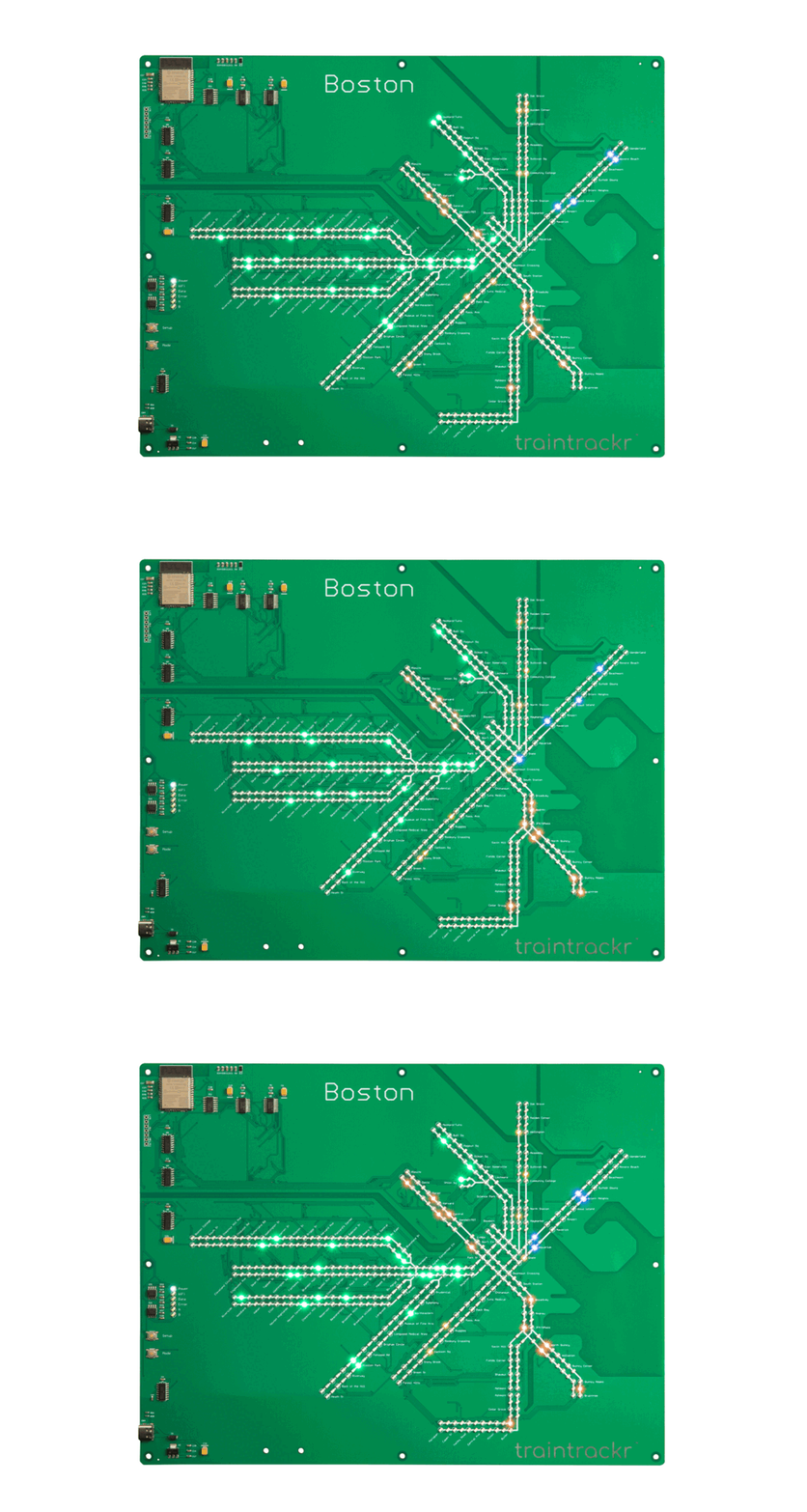 restaurant near a train line can tell their customers when a train is arriving.
Another use, as in the case of the Nashua fire department, is to have an interface that allows authorized vehicles such as ambulances to share common priority routing. While the system that Nashua is using is a great advance, it becomes simple, and a resource, once we can use APIs instead of building another bespoke system.
Again, as Mexico City shows, full use of the APIs requires treating the connectivity like the sidewalks – as a means and not as a profit center. You may still need to pay for a service, but it makes no sense to make the roads and wires a profit center if it is at the cost of hobbling the wider society.
The Public Packet Infrastructure
So Close …
If we go the smart cities example, something as simple as removing the need to login (as in the example of Rome) would essentially give us the first stage of PPI. Full availability would basically remove the need for people to have a broadband subscription, while providing wide opportunity for innovation. Market forces and the virtuous cycle would do the rest.
Connectivity Begins at Home
Very simply the public packet infrastructure is the implementation of connectivity as infrastructure. You can think of it as open Wi-Fi everywhere but it’s far more than that. One the physical side it can merge cellular, Wi-Fi, fiber, phone wires and more into a common super-abundant open infrastructure. The city doesn’t own it in the sense of a billable service but rather in the sense that it is the steward of the sidewalks and roads on behalf of the community. Since it is open, anyone can add capacity.
The initial protocols would be taken from the Internet but that’s just the starting point since we want peer connectivity and can’t tolerate a DNS that expires. That is a separate topic in its own right which I’ll address in a more technical drill-down.
Your home network is a prime example of a PPI. When broadband was first offered there was a charge for each PC because each IP address was treated as a phone number. People were used to paying per-line and they couldn’t share them if two PCs were online at once. It wasn’t an obvious problem in a time when people had one PC at home. Microsoft marketing saw no need for the capability, just as today it is a challenge to get people to see the value of open connectivity.
Fortunately, I was able to get the key capabilities into Windows to enable sharing a single connection. You now have a packet infrastructure within your home that enables your PCs, TVs (streaming), light bulbs, and even train maps and more to communicate with each other and the larger world. Imagine if there were a pay wall and a monthly fee per device!
They then share the single broadband (or other connection) to the larger Internet. They are participants rather than visitors dialing in.
A technical detail, the need to onboard devices using an SSID and a password, is a legacy problem. We need a simple standard such Eff’s Open Wireless. This would enable devices like the connected pill bottle to work without any setup needed.
It is important to understand that there is essentially no cost to your home network. All you are paying is the monthly fee to rent the wire to your house. The rate of adoption of home networking is essentially 100% among people with Internet connectivity.
The big change from the time when I first embarked on the effort to shift the design point from having to connect to the Internet to get on AOL to today is that we just assume connectivity.
But just as in the 1990s there was the barrier of a charge per device, we now have a barrier of a charge per house and that is just as, if not more, destructive. It’s not just a digital divide due to the concept of being unable to afford a connection; it disenfranchises those most in need be it financial or the need for connected health, car or work or … well just about anything.
It also means that the community cannot assume connectivity for basic things like meter reading and connected fire alarms.
There is no reason to disenfranchise by requiring a subscription any more than there is a need to make strolls unaffordable by paying for the sidewalk by putting a turnstile in front of each house. The value of the sidewalks is in the whole and not the parts by themselves.
A Normative Model
The normative model is very simple. Treat connectivity like any other municipal infrastructure with a community IT Staff which could be outsourced just like communities outsource garbage collection.
The technical aspects of connectivity differ from today’s broadband, but we can start with today’s broadband and, without the need to restrict connectivity in order to charge a subscription fee, we can start to make it more resilient as with wireless failover.
The key point is that connectivity needs to cover a geographic footprint so that simply being present means you are authorized. Thus, there is no need to prove you are a subscriber. Merely being there is sufficient, as with sidewalks.
This isn’t a big ask, since cities already recognize the need for connectivity and are installing fiber.
Note that fiber is not necessary. I originally proposed starting by repurposing existing phone wire in the 1990s. The key point is to enable the virtuous cycle by assuring Ambient Connectivity. That will quickly drive community support for adding more capacity.
As adjacent communities adopt an infrastructure model the economies of scale will rapidly increase. Even without it a mile of fiber can cost $20,000. Compare this with a city street that is one to two million per mile. Connectivity is essentially free by comparison and the value is immeasurable.
Transitioning Existing Communities
Cities that currently have an ISP model can simply convert the relationship and treat the ISP as an IT department for hire.
Cities that have franchise broadband can adopt a single payer model. If connectivity is a need, then the goal should be a 100% take up-rate even if only for the city’s need to manage infrastructure such as meter reading, and for ensuring that education and health are connected etc. Going with a single payer model removes the costs of preventing people from connecting automatically just so they can be billed.
For cities with multiple broadbands plus wireless connections it is worth doing a thought experiment. If a single broadband infrastructure can serve the entire city, then what is the value of the second player, since the city only needs to negotiate with one wired provider to serve the city? And it gets wireless coverage simply by mounting simple Wi-Fi access points along the poles – something cable companies already do.
But a single payer model is only transitional since it makes no sense to rent forever when the city can own the infrastructure. It is less expensive to build a new infrastructure in the long term than to rent forever. That puts the city in a very strong bargaining position and the current providers know this.
This is why Comcast is now NBC and treats their existing infrastructure as a cash cow that will soon be gone. They already outsource the field support – something the city can do just as well. It is even better when they use modern software to manage the facilities and failover automatically while they work to repair problems.
The situation is tougher for legacy telecommunications companies – Verizon and ATT in the US – which pride themselves on being service providers in an age when we no longer need their services. Unlike Comcast, their forays into the media business have done badly. Once Ambient Connectivity is understood they will be at the mercy of market forces.
All this goes to say that the only thing holding us back is ourselves. Once the compelling advantages of connectivity are understood, there will start a rapid shift away from legacy telecom as a half-century of pent-up change plays out.
On the Farm
Most of the examples I’ve given are urban. But rural communities have needs and advantages. They often have cooperatives and need devices to manage fields but have to provide their own connectivity since they are not markets for carriers who want volume.
This is all the more reason they need to be owners rather than renters so they can invest in their communities. Broadband subsidies should accrue the community, not to remote shareholders.
It’s also important to avoid getting caught up in particular technologies. If there are phone wires, they can provide high-capacity connectivity using modern technology and treating them as a common medium. Given the low density, radio and other technologies should be far easier to manage than in cities.
We should not be scared off by claims of high cost from legacy carriers but should instead empower these communities.
The Developing world and Community Nets
I understand the appeal of creating Wi-Fi meshes and other technologies. It’s the comfort zone for technologists who want to “do good”.
The key is to take an economic approach and find value in local connectivity as mentioned above in “Fiber is for Donkeys”.
The economic-based approach is to pool resources to invest in local infrastructure and then share a pipe to the wider world. That pipe can be shared among those communities.
Volunteers can help, but understanding the economics of connectivity is key.
Write Larger
In the past I’ve tried to get MDU (apartment building) owners to see the value in providing their tenants with connectivity as an amenity, and some do. But, in reality the value comes when we have a community that can benefit from the virtuous cycle. In effect early adopters of this approach will be an innovation zone as people take advantage of Ambient Connectivity as a resource.
In 2008 Iceland took emergency action to take control to reform their financial institutions. Imagine if they were able to reform the telecommunication industry to bring connectivity in alignment with the new reality.
Once connectivity is seen as being like roads and sidewalks, then it’s hard to defend the legacy approach of limiting connectivity because once upon a time phone calls were a service. While home networking sparked much innovation, imagine what becomes possible at a larger scale.
In the Interim
Opening the physical infrastructure is just one aspect. More important is to understand the new opportunities as Mexico City did in moving their services online. We can program to the Internet packet interface without the PPI and then gain more reach and simplicity and reduced costs as we transition to a PPI.

We have already seen the importance of APIs.
The QR code is an example of defining a relationship using the same principles but without relying on a third party. Concepts like managing relationships by modifying binding in software using nonsemantic links is another example.
This is part of a new literacy. It’s not about “digital” as such but a deeper set of concepts including how language works. A very good example is how “digital literacy” has come to mean being adept in the use of social media as a consumer rather than understanding the underlying concepts that have made the new “social” possible as a small part of a far larger transition that includes LLMs (Large Language Models).
The Business of Supporting Connectivity
There’s a need for expertise for this new generation of connectivity. The kind of technical people hired by a company like Comcast are readily available. The missing piece is the equivalent of a general contractor who understands the different way that skills can be applied to the new infrastructure. For larger communities that means inhouse expertise.
The general contractor role involves assisting communities renegotiating existing franchises and ISPs to shift to a single-payer model as a transition towards local ownership.
There is also the need for the equivalent of Cable Labs for developing the new protocols for connectivity, and to work with existing groups such as the IETF and vendors of gear.
This is a very large market, because it’s not just about the “plumbing” but also about making effective use of connectivity as a community resource.
Additional Readings
There is too much material to explain everything in one essay so here are the links to my other articles.
- The Internet as Infrastructure FAQ
- From Access to Connectivity. Why today’s focus on broadband misses the point and limits our ability to embrace new possibilities.
- Purpose vs. Discovery – why opportunity creates more value than just providing a slate of services and solutions.
- VoIP Inflection. How Voice over IP works and why it is so significant.
- Refactoring Consumer Electronics. This was my first column. It explains how to derive the Internet from first principles. It is framed as refactoring because that is what the Internet does by factoring out the connectivity (or the “between”) from the relationships between endpoints.
- The Age of Software. A far more philosophical dive into the new concepts.
Epilog
- Why focus on the PPI and economics?